Showing posts with label china. Show all posts

Tuesday, July 26, 2016

Tuesday, August 25, 2015

Revisiting the 2007 Puerh Market Crash


2007 was a turbulent year for those involved in puerh tea, especially tea businesses that were heavily invested. After a decade of escalating prices the momentum driving the value of puerh tea would peak during the spring of 2007. However the high prices could not hold and as the price for puerh tea tumbled, the first crash of the modern day puerh market was at hand. Fueled by heavy speculation and in part the wave of euphoria generated by the Chinese national media the price of puerh tea was at an all time high and was no longer sustainable without a significant correction. Furthermore the realization that the quality of puerh tea was increasingly being compromised for bigger profits by producers had begun to greatly dampen the euphoria of puerh tea leading up to 2007. A lack of confidence in new products whereby quality was sacrificed for quantity increasingly deterred buyers and investments. By mid-2007 the puerh tea market had crashed. As prices plunged to deeper depths for the reminder of the year many tea businesses that had gambled on escalating prices would be forced to close their doors.

Tuesday, July 28, 2015

Age Da Hong Pao


Da Hong Pao is a famous oolong tea that originates from the beautiful and scenic Wuyi Mountains in Fujian Province, China.

In the category of age tea, despite there being many different types of tea there exist similarities that define this unique group of tea. To understand the nature of age tea and how these teas develop with time a tea drinker must drink widely. Having covered age puerh and old versions of Liu An and Fu tea in this entry I present the first age oolong - Da Hong Pao. The heavy roast employed in the production of Da Hong Pao makes this tea a good candidate for aging. I find that time can enhance a young Da Hong Pao by softening the strong elements of the newly roasted tea. The fire elements, astringency and stiffness of the new tea will settle with time and the character of the tea will open up to greater complexity. An age Da Hong Pao can develop smoother and more rounded characters, increasing in sweetness and becoming more viscous when brewed.

Friday, February 13, 2015

The Reign of Chairman Mao Zedong (1949-1976) - Part2/2

20th Century Chinese History - Article 2 >> go to Main Page

3) The Cultural Revolution (1966-76)
 Culture must serve workers, peasants and soldiers, must serve proletarian politics

Tuesday, February 10, 2015

The Reign of Chairman Mao Zedong (1949-1976) - Part1/2

20th Century Chinese History - Article 2 >> go to Main Page

Chairman Mao Zedong aka Freedom Fighter, Great Leader, Visionary, Hero, Legend, God. Whilst all this is true the period that Chairman Mao reigned from 1949 to 1976 as the undisputed leader of China was a time of immense upheaval, turmoil, great suffering and an unprecedented loss of lives. The reign of Chairman Mao will perpetually be remembered under three key events; 1) Class Warfare, 2) The Great Leap Forward and the Great Famine, 3) The Cultural Revolution and this is where we will focus our attention.

1) Class Warfare (Early 1950s)
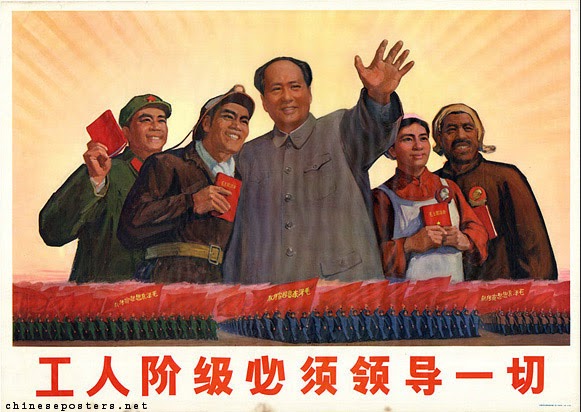
The working class must rule everything

Friday, February 6, 2015

The Chinese Civil War (1927-1949)

20th Century Chinese History - Article 1 >> go to Main Page

The year 1927 was the start of the Chinese Civil War between the Nationalists Kuomintang (KMT) and the Communist Party of China (CPC). Each political party had different ideologies on which to govern the country but the two that most stood out were capitalism and communism as each party represented a different class of society. Early in the war the Kuomintang under Chiang Kai-shek was expected to crush the People's Liberation Army (PLA) under the Communist Party. At the time the Nationalists were the legal government of China and held superior advantages in numbers and resources with foreign aid coming from America. However plagued by bureaucratic inefficiency and corruption the war dragged on for decades and was interrupted by the Japanese invasion during World War II before resuming.

Tuesday, February 3, 2015

Chairman Mao & The Communist Party - A History Recorded by 2 Teas

i) Sailing the seas depends on the helmsman, waging revolution depends on Mao Zedong, ii) 1970s Fu Brick, People’s Unification Tea from the time of Chairman Mao’s Cultural Revolution, iii) 1950s Liu An Sun Yishun

A part of the allure of old teas is the period of time and history that they represent. Each tea has a story to tell and the 2 old teas that I will be reviewing this month are no different. Both teas come from a time of immense upheaval and unrest that coincides with the rise of Chairman Mao Zedong and the rule of the Communist Party of China. The contrasting qualities of the 2 old teas in many ways mirror the two prominent political parties (Kuomintang, KMT and Communist Party of China, CPC) at the time. The turn of events would cause each to take two very different paths.

Friday, January 30, 2015

The Tea Market Series (In China) – Article 3 Part 2/2

The Misrepresentation of Age in Puerh Tea - Old Tricks Become More Refined
The misrepresentation of age for puerh tea is a common occurrence. It is a scam initiated by dishonest merchants and spread by those who are unawares. The lack of information and labeling on older teas (especially individual teacakes) from pre 2005 productions makes it difficult for consumers to easily identify the real age of tea. All too frequently merchants are happy to come in and make up those numbers to their advantage by inflating the age of the tea.

During the first wave of the puerh boom in the early 2000s many inexperienced and naïve Chinese buyers came on to the scene. The Chinese people were attracted by the national euphoria that surrounded puerh tea. Puerh was widely promoted as a national heritage and often presented with connotations as being the best Chinese tea. Many people who had previously no interest in puerh tea became caught up in the hype and bought blindly. There was such little knowledge on the part of buyers that dishonest merchants could blatantly pass off a newly produced ripe puerh tea as a precious 30 year old aged raw tea. This simple scam worked amazingly well for a number of years such was the lack of knowledge amongst new buyers during those early years.

Thursday, January 22, 2015

The Tea Market Series (In China) – Article 3 Part1/2

Tricks of the Trade 
Tea leaves harvested from ancient trees are multiple times more valuable than those picked from modern plantations. The price for the tea leaves are then further elevated based on which famous region they are sourced, Lao Banzhang and Yiwu make up some of the most in demand locations. Such teas command high prices and are attractive to scammers as they can bring in a lot of profits. It is this reason you will find a multitude of fake and fraudulent teas with associations of being big tree material and/or from Lao Banzhang or Yiwu.

When you visit China’s tea market it is important to realize that for a famous regional puerh tea like Lao Banzhang* the estimated annual spring production is 10 tons but roughly 5000 tons of tea is sold in China’s tea market under this description. Whether most of the tea sold is fake and/or heavily blended with cheaper raw materials from elsewhere this is a business practice that is rife throughout China. Big profits are made this way by both dishonest merchants and tea producers who apply this strategy to all teas that command a meaningful enough price.

Friday, January 9, 2015

The Tea Market Series (In China) – Article 2

The Reality of China’s Tea Market – A Big Business Perspective
What does the Chinese Tea Market and all these businesses have in common? It is maximizing profits. The process and behind the scenes operation isn't always pretty but in summary it is buy low and sell high.

The Chinese shopkeepers, especially the middle age aunties and uncles with pleasant and friendly smiles are some of the most able business people I have come across when it comes to their ability to buy low and sell high or to simply pass on a dud to an unsuspecting customer. These people have Wall Street and Big Corporation genes that would make the top executives in those industries proud. Forget the market price, if you forget, they will also gladly forget. The asking price changes often and more so as the customer change. It is business but also a bit of a game.

Thursday, December 25, 2014

The Tea Market Series (In China) – Article 1

The Dream – My First Trip to China’s Tea Market

A list of some well known and colossal Chinese tea markets from left to right 1) Annual Guangzhou Tea Expo 2) Fangcun Wholesale Tea Market in Guangzhou 3) Maliandao Tea City in Beijing 

Tea enthusiasts are a different breed when we hit the tea markets, especially the "Big One". We hit them running and we don’t stop until the day is over. We are a tough, stubborn and unrelenting lot. Our never say die attitude literally translates to, “we will drink till we die”. For those who don’t know, you’ll find out what that means here.

Tuesday, December 23, 2014

The Tea Market Series (In China)


The Tea Market Series consists of 4 articles detailing my experience and impressions of the colossal Chinese Tea Market. It is a firsthand account by one dreamy tea enthusiast who during the early years of his pursuit of puerh tea started his run at one such market and experienced the high emotions of bliss and overindulgence followed by the crash and a dose of reality. The series chronicles my initial impressions, gained understanding, growing insights on the tea trade and how this opened my eyes to the world of business. In conclusion I share the lessons learned and provide advice for those who may one day also decide to make a run at one such wonderful and challenging a market.